First Aid Training in Saudi Arabia: AHA First Aid, CPR and AED Course
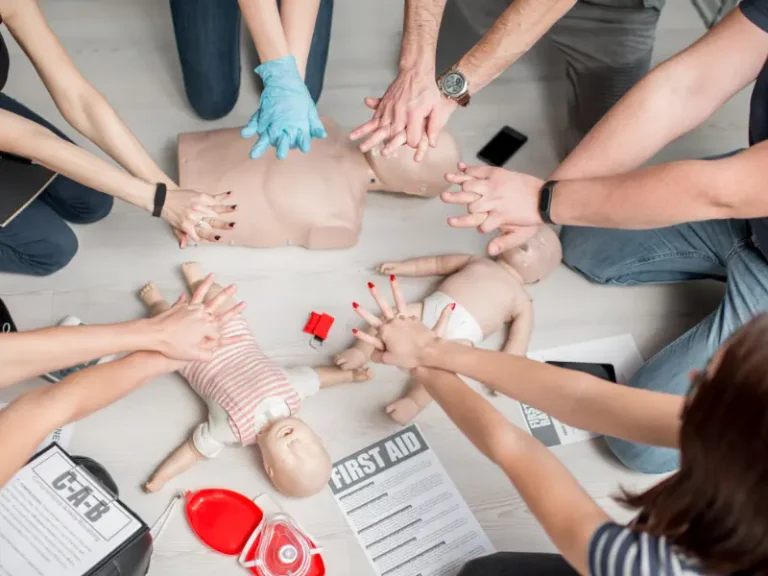
First aid training teaches you what to do in the first few minutes after someone is hurt or suddenly falls ill. In one day, you learn how to stop bleeding, help someone who is choking, give CPR and use an AED. At Staff Development Training Center (SDTC), our first aid course follows the American Heart Association (AHA) Heartsaver First Aid CPR AED course. You train hands-on with manikins and AED trainers, and you leave with a certificate that is valid for two years.
The course is usually completed in a single day, in-class at our centres or on-site at your workplace, and is delivered in Jubail, Dammam, Al Khobar, Riyadh and Jeddah.
What is Basic First Aid Training ?
First aid is the help you give an injured or sick person before a doctor or ambulance takes over. It can stop a small problem from getting worse, and in a cardiac arrest it can keep someone alive.
Basic first aid and CPR AED training, also called emergency first aid training, teaches non-medical people how to respond to the most common emergencies.
You learn CPR (cardiopulmonary resuscitation), how to use an AED (automated external defibrillator), how to control bleeding, and how to manage burns, fractures, choking and shock.
First aid is the help you give an injured or sick person before a doctor or ambulance takes over. It can stop a small problem from getting worse, and in a cardiac arrest it can keep someone alive.
Register Now
Why do you need a First Aid And CPR Training Certificate?
First aid Course is important not only because it encloses the ability to help others but also because it is a requirement for many recruiters. Jobs in sectors like the construction industry, factories, offices, healthcare, and education mostly demand a first aid CPR AED-certified employee, especially by regulatory bodies in Saudia Arabia. It not only ensures a safer workplace but a higher chance for you to secure a job.


What certificate do you get?
SDTC issues your first aid training certificate through the American Heart Association (AHA). The AHA Heartsaver First Aid CPR AED course is built for people with little or no medical background who need a course completion card to meet a job or regulatory requirement, and it is recognised internationally and across Saudi Arabia.
Your certificate is valid for two years. Before it expires, a short recertification course renews your card and refreshes your skills.
Accredited American Heart Association CPR & First Aid
Accredited first aid training means your certificate comes from a recognised authority, not an in-house slip of paper. SDTC delivers American Heart Association CPR and first aid training to the AHA’s current guidelines, so the Heartsaver completion card you receive is trusted by employers and regulators across Saudi Arabia. If your workplace asks specifically for AHA certification, this course meets that requirement.
Course Objectives
A basic first aid course’s primary goals are to
Benefits of First Aid Course
The benefits of first aid and CPR AED Course are exceptional such as:
First Aid Course Content: What You Will Learn
Module | What you cover |
|---|---|
Course introduction | The course format and goals, and what you will be able to do by the end |
First Aid Basics | What first aid is and its goals; the first aider’s roles and responsibilities; the general approach to an emergency; managing multiple casualties; universal precautions including hand hygiene and PPE; assessing the scene and the casualty. |
Medical emergencies | Breathing difficulties; chest pain and heart attack; shock |
Trauma emergencies | External and internal bleeding; cuts and grazes; dental avulsion; blisters; burns; fractures, sprains and strains; spinal injury; head injury |
Adult CPR | Hands-on cardiopulmonary resuscitation for adults. |
Using an AED | How to safely use an automated external defibrillator |
Child CPR | CPR technique adapted for children |
Infant CPR | CPR technique adapted for infants. |
Choking (airway obstruction) | Relieving a foreign-body airway obstruction in adults, children and infants |
How long is the course and how is it delivered?
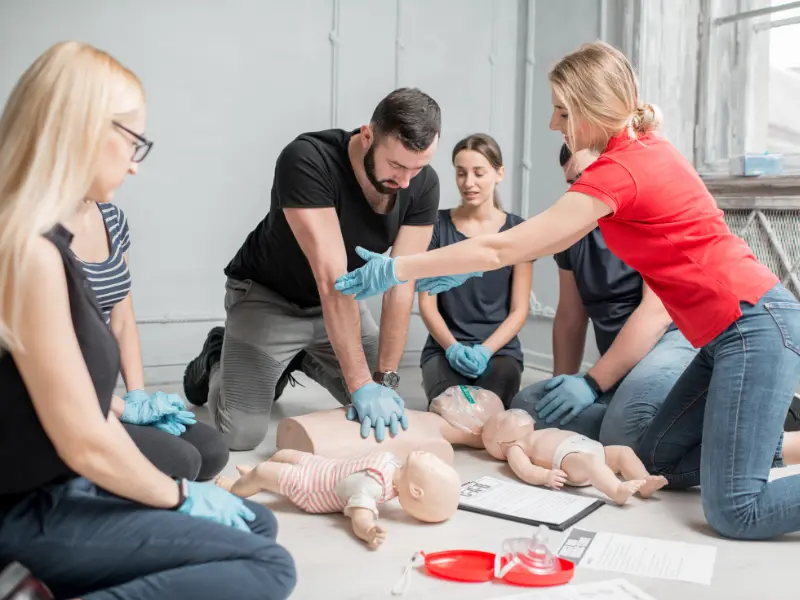
Basic first aid training at SDTC takes approximately six hours, completed in a single day, including lecture, hands-on practice and a skills check.
You can train in two ways:
CPR Certification and AED Training
If you need CPR certification, you do not need a separate course. Our first aid course includes full CPR training, so it works as first aid and CPR training in one, with both on the same AHA card.
CPR (cardiopulmonary resuscitation) uses chest compressions and rescue breaths to keep blood moving to the brain when the heart stops. An AED (automated external defibrillator) can shock the heart back into a normal rhythm, and you practise with an AED trainer in class.
If you work in healthcare, you need a different CPR course. Doctors, nurses and paramedics usually take our Basic Life Support (BLS) course
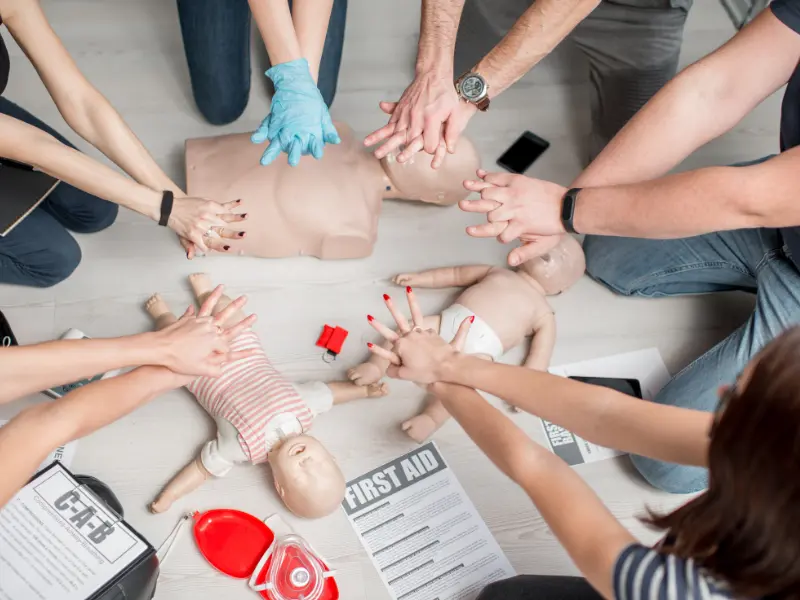
First Aider Training for Workplaces
Saudi employers must be ready for injuries at work. Article 142 of the Saudi Labor Law says employers must provide first aid cabinets, and that the regulations set out the requirements for the people who give first aid.
Saudi employers must be ready for injuries at work. Article 142 of the Saudi Labor Law says employers must provide first aid cabinets, and that the regulations set out the requirements for the people who give first aid.
Benefits of first aid training in the workplace
For your organisation, workplace first aid training:
For employees, a recognised first aid certificate improves workplace safety and strengthens employability.
Who should take this course ?
This course suits anyone who may need to respond to an emergency, or who needs a certificate for work. Common groups include:
First aid training for every industry in Saudi Arabia
Whatever industry you work in across Saudi Arabia, from construction, oil and gas and factories to offices, hospitals, schools and hotels, accidents and sudden illness can happen at any time. For this reason, first aid training is essential for every worker, not only designated first-aiders. Employers across the Kingdom increasingly require staff to hold a valid first aid certificate, so being trained protects your colleagues, keeps your workplace compliant, and strengthens your own employability
First aid training for schools
School staff have a duty of care for pupils. First aid training prepares teachers, administrators and support staff to handle playground injuries, allergic reactions, choking and other emergencies until help arrives. We can train your whole school team on-site.
Basic first aid training for teachers
Teachers are often the first responder when a child is hurt at school or on a trip. Basic first aid training for teachers covers the everyday emergencies seen in classrooms, giving staff the confidence to act calmly and correctly.
Compulsory first aid training for drivers
For many professional and company drivers, first aid training is effectively compulsory, because being first on the scene of a road accident is a real possibility. This course teaches drivers how to give fast, safe assistance at the roadside until emergency services arrive.
What does basic first aid training cost in Saudi Arabia?
The fee for first aid training depends on a few factors:
On-site group training usually works out lower per person as the group grows. Contact SDTC for a current quote for yourself or your team.
Where we deliver first aid training in Saudi Arabia
SDTC delivers basic first aid and CPR training across the Kingdom, at our centres or on-site at your workplace:
Wherever you are in Saudi Arabia, our trainers can travel to your site from our Eastern Province head office.
Learning Mode
In- Class
ON-site
How to Choose First Aid Training Provider In Saudi Arabia
Not every first aid course leads to a recognised certificate. When you compare providers in Saudi Arabia, check that they offer:
Good first aid providers give you plenty of hands-on practice and a card from a recognised awarding body. The AHA Heartsaver First Aid CPR AED course gives you first aid, CPR and AED skills in one day.
First Aid Training in Saudi Arabia: Where We Train
Staff Development Training Center is a trusted safety training institute in Saudi Arabia, we offer first aid training in Saudi Arabia from its head office in Al Jubail. Our trainers also travel to companies across the Kingdom.
If you are looking for first aid classes near me, you can join a small-group class at our centre or ask us to train your team at your own site. We regularly receive bookings from Jubail, Dammam, Al Khobar, Riyadh and Jeddah.